

A Pakistani shaadi is not one event. It is a dholki or two, mehndi on each side, the barat and nikah, the rukhsati and the walima, planned by two families, a dozen vendors and at least one phuppo with strong opinions. Without a list, something gets missed.
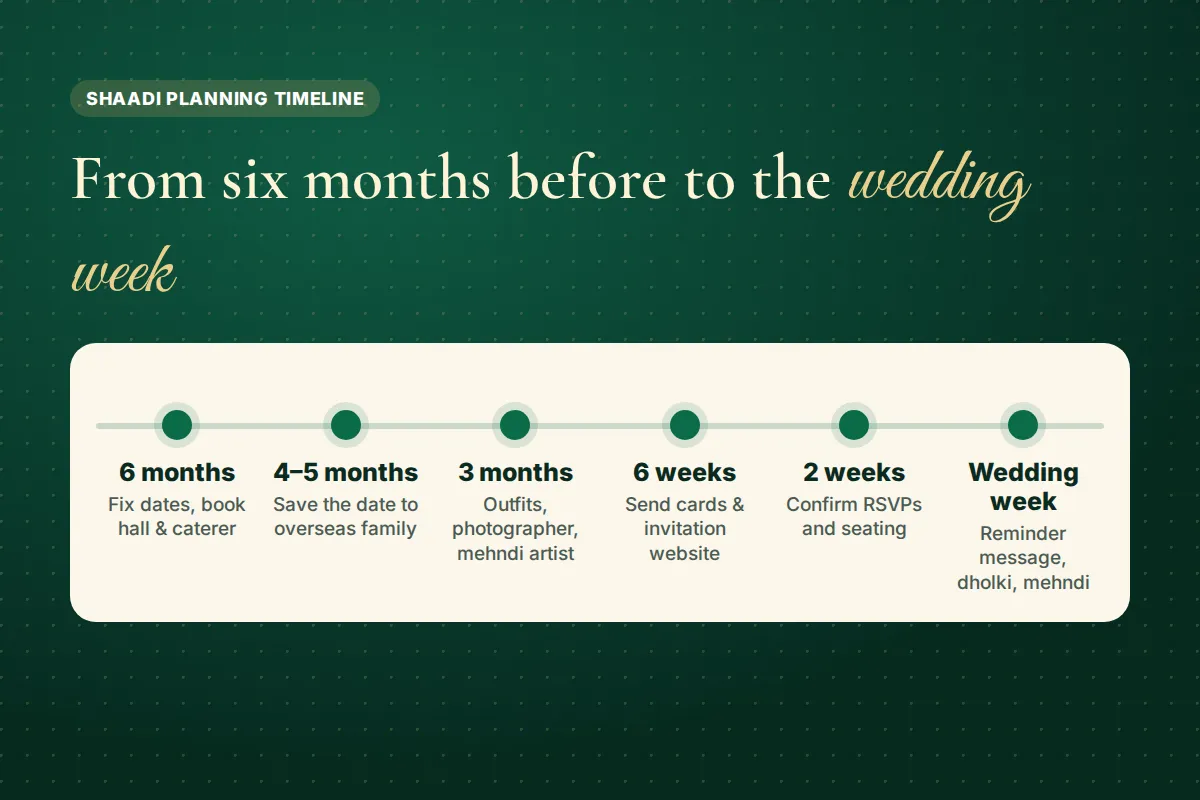
Quick answer: this shaadi checklist starts six months before: fix dates and budget, book halls, then the photographer, caterer and bridal wear. Send save the dates 3–6 months ahead, cards 4–6 weeks before, and reminders the evening before each event. The month-by-month plan, a tick-list for every event and budget tips follow.
Pick your season first
December is no longer the only wedding month. Tribune's T-Magazine reports that October is the new December: the season now runs from October to March, families avoid Muharram, Safar and Ramazan, and venues can charge up to 20% more in December than in November. An October or November date means better halls, calmer tailors and cheaper flights for relatives abroad.
Shaadi checklist: month by month
6 months before
- Agree on dates with both families, and check them against the Islamic calendar.
- Set a total budget and decide who pays for which event.
- Make a first guest list for each side, even if rough.
- Book the halls or marquees for barat and walima. Good ones go first.
- Book the photographer and videographer.
4–5 months before
- Order the bridal outfit and the groom's sherwani; heavy work takes months.
- Book the caterer and fix the menu for each event.
- Book the bridal makeup artist for mehndi, barat and walima.
- Send save the dates to overseas and out-of-city relatives.
3 months before
- Book décor and stage for each event, and the mehndi dholwala or DJ.
- Buy jewellery, and plan the bari and jahez lists.
- Choose the nikah khwan and fix the haq mehr.
- Send save the dates to local guests.
2 months before
- Finalise the guest list and the count for each event.
- Book rooms or arrange stays for relatives coming from other cities and abroad.
- Order outfits for the family: matching mehndi colours, barat clothes.
- Decide the card wording and design.
4–6 weeks before
- Send the cards on WhatsApp, and print a few for elders.
- Book transport: the barat cars, and a van for relatives.
- Book the mehndi artist for the bride and the family.
- Confirm everything with every vendor, in writing.
2 weeks before
- Final fittings for the bride, groom and parents.
- Chase RSVPs and give the final head count to the caterer.
- Withdraw cash for salami, vendor payments and tips, and pack it in labelled envelopes.
- Assign one person on each side to handle vendors on the day.
Wedding week
- Send a reminder the evening before each event, with the location pin.
- Pack the bride's bag: outfits, jewellery, safety pins, medicines, phone charger.
- Keep the nikah nama, both CNICs and witnesses' details in one folder.
- Sleep. Seriously.
Checklist for each event
Dholki
- Dates and host homes for each dholki night.
- Dholak, songs list, chairs, durries and cushions.
- Chai and snacks for 20–60 people.
- A simple dholki card or a WhatsApp message to the women of the family.
Mehndi
- Stage, swing or jhoola, and the mehndi thaals.
- Dance practice dates for cousins.
- Yellow and green outfits for the bride and her side.
- Ubtan and mehndi for the rasm, and mithai.
Barat
- Car decoration for the groom, and the barat route and arrival time.
- Phoolon ki chadar, the welcome with rose petals, and the doodh pilai rasm.
- Agree on the hall's closing time; many cities require events to end by a set hour.
Nikah
- Nikah khwan booked and confirmed.
- Nikah nama, CNICs, two witnesses from each side, and the haq mehr agreed.
- Chhuharay and mithai to distribute after the nikah.
Rukhsati
- The Quran for the bride to walk under, and the car to the groom's home.
- The bride's overnight bag and the bari trunk sent ahead.
- A family member to travel with the bride's things.
Walima
- Hall, menu and head count from the groom's side.
- The bride's walima outfit and makeup booked.
- Seating for the bride's family as guests of honour.
Invitations timeline
Cards are a small cost but a big source of last-minute stress. Spread them out:
- Save the date, 3–6 months before: names, dates and city. Samples are in our save the date message guide.
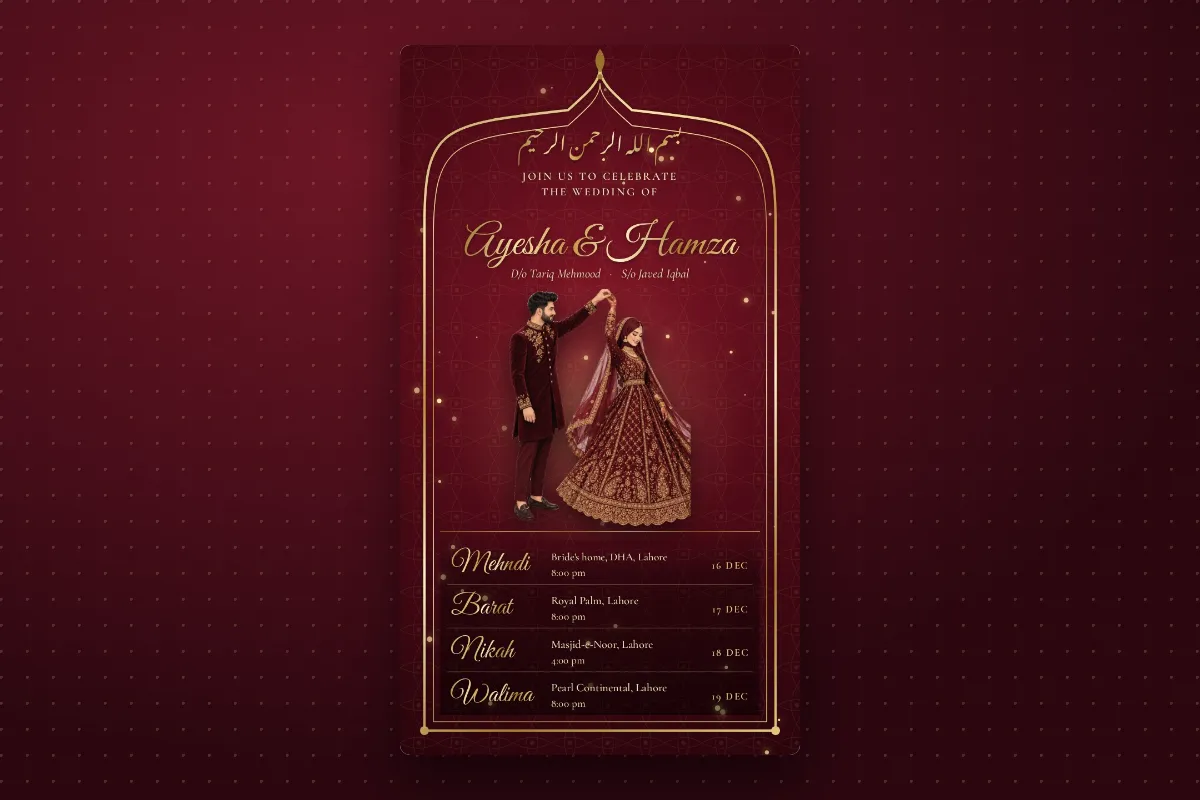
- Cards, 4–6 weeks before: every event with its day, time and venue. Use a shaadi card with up to four events on one card, or one card per event.
- Reminder, the evening before each event.
For the messages to send with the cards, see our wedding invitation message samples in English, Urdu and Roman Urdu.
Keep the guest list on WhatsApp, in one place
Most Pakistani guest lists live in five people's heads. Put it in one place instead: a shared Google Sheet, or a WhatsApp chat with just yourself where you pin the list. Keep these columns:
- Name and household ("Bilal bhai & family").
- Side: bride's or groom's.
- Events invited: dholki, mehndi, barat, walima.
- Number of people.
- Card sent, and RSVP yes or no.
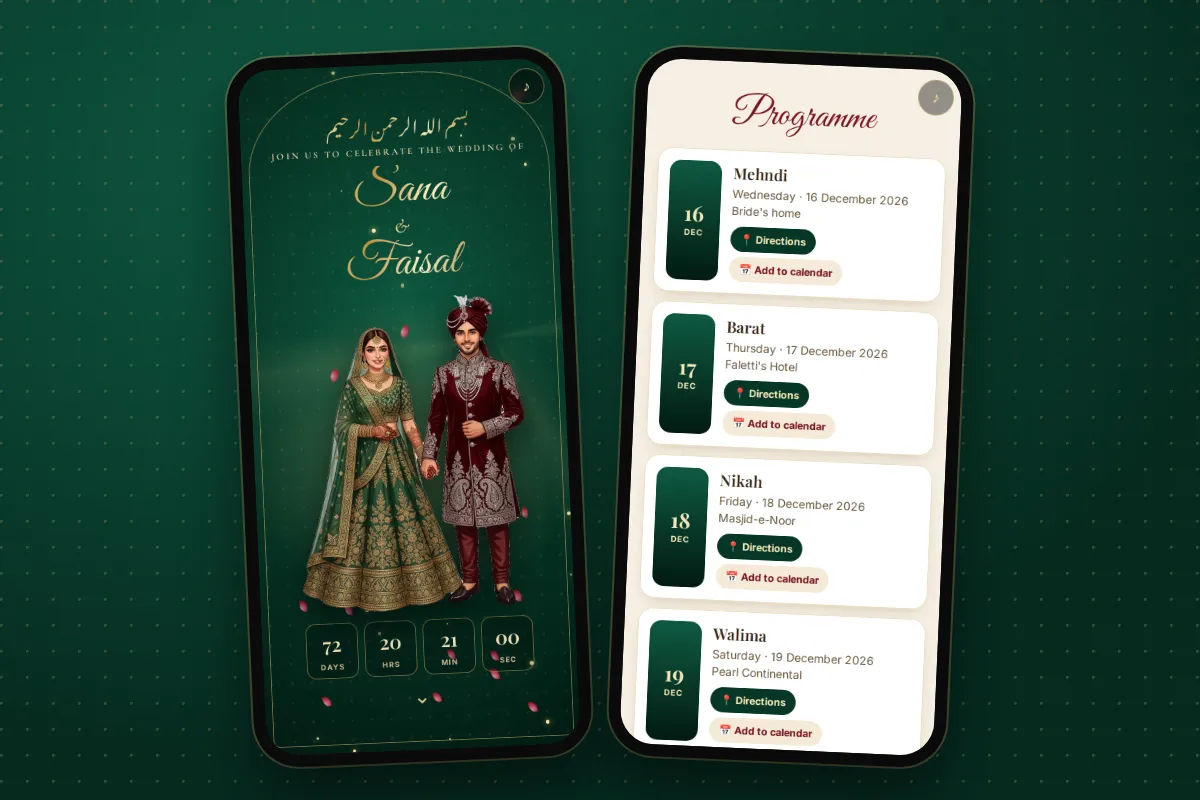
An invitation website makes the last column easier: guests press RSVP and enter their guest count, and you see who is coming without calling forty khalas.
Budget tips that actually save money
- Choose November over December. The same hall can cost up to a fifth less.
- Book a weekday. Halls and photographers often charge less Monday to Thursday.
- Combine events. Barat and nikah on one evening, or a joint mehndi for both sides, cuts a hall, a stage and a meal.
- Cap the guest list early. Every name is a plate at every event it appears on.
- Order outfits early. Tailors add surcharges for rush orders in peak season.
- Go digital with cards. Send WhatsApp cards to most guests and print only for elders.
- Keep a 10% buffer. Something always costs more than quoted.
Shadi ki tayari list, in short
Dates and halls first, then people (photographer, caterer, makeup), then clothes, then cards, then confirmations. Keep one guest list, one budget sheet and one person in charge on each side. When the cards are due, make the full set in English or Urdu, look through the live invitation website demos if you want one link instead, and spend the time you save at the dholki.


